Courteney Cox has been unusually honest about chasing a younger face. In a 2022 interview with The Sunday Times, she said she spent years trying to hold on to how she used to look, and only later realized the injections were making her look “really strange.” She has said she had her filler dissolved. Back in 2017 she told NewBeauty, “I feel better because I look like myself.”
In a 2023 podcast interview she put it plainly: “I think I messed up a lot,” adding that she was lucky to be able to reverse most of it.
Her story is not an argument against treatments. It is a reminder that mature skin does best with steady basics and a light hand. Here is what helps at home, what to skip, and how to choose in-office care in Manhattan without overdoing it.
What changes as skin ages
- Less collagen and elastin. Skin gets thinner and less springy, so lines form more easily and take longer to soften.
- Less oil. Mature skin is often drier and more easily irritated, especially in winter.
- Slower turnover. Dead cells build up, so skin can look dull and rough.
- Sun damage shows. Most of the wrinkles, brown spots and uneven tone people blame on age come from years of sun.
- Menopause. Falling estrogen can make skin drier and thinner fairly quickly.
What you can do at home
- Sunscreen every morning. Dermatologists recommend a broad-spectrum, water-resistant SPF 30 or higher on all skin that clothing does not cover. Include your neck, chest and the backs of your hands. This is the single best thing you can do, at any age.
- A retinoid at night. Retinoids are the best-studied creams for fine lines and rough texture. Start with an over-the-counter retinol or adapalene two or three nights a week, then build up. A dermatologist can prescribe tretinoin if you want something stronger. Skip retinoids if you are pregnant or trying to be.
- A richer moisturizer. Look for ceramides, glycerin or hyaluronic acid. Put it on damp skin morning and night, and use a body moisturizer and lip balm too.
- A gentle cleanser. Wash with lukewarm water and a mild, non-soap cleanser. Skip the scrubbing.
- Vitamin C in the morning. A vitamin C serum under sunscreen can help with dullness and uneven tone.
- Sleep, no smoking and good food. Smoking speeds up wrinkles. A steady diet of fruit, vegetables, lean protein and healthy fats helps your skin as much as anything in a bottle.
What to avoid
- Tanning beds and “base tans.” UV is the main thing that ages skin early.
- Harsh scrubs, peel pads every day and hot showers. Mature skin is thinner and gets irritated faster.
- Starting five new products at once. If your skin reacts, you will not know which one did it.
- Chasing your old face. This is Cox’s point. Too much filler, or too much at once, can look heavy or unnatural. Ask for a little, wait two weeks, then decide.
- Bargain injectables. Ask who is injecting, what product they use and where it came from. Very low prices are a warning sign.
When to see a pro, and what they may suggest
A Manhattan dermatologist can check your skin, prescribe a stronger retinoid, and tell you which in-office options fit your goals. Prices below are typical Manhattan ranges from practices that publish them on NYC Hot List.
| Option | Best for | Typical Manhattan price | Good to know |
|---|---|---|---|
| Botox and other neurotoxins | Forehead lines, frown lines and crow’s feet | $12 to $18 a unit | Lasts about 3 to 4 months. A lighter dose keeps your expressions |
| Hyaluronic acid fillers | Lost volume in cheeks, lips and folds | $375 to $3,990 | Most can be dissolved with an enzyme if you do not like the result |
| Sculptra | Gradual, overall volume | $599 to $800 | Builds your own collagen over 2 to 3 sessions, so results look natural |
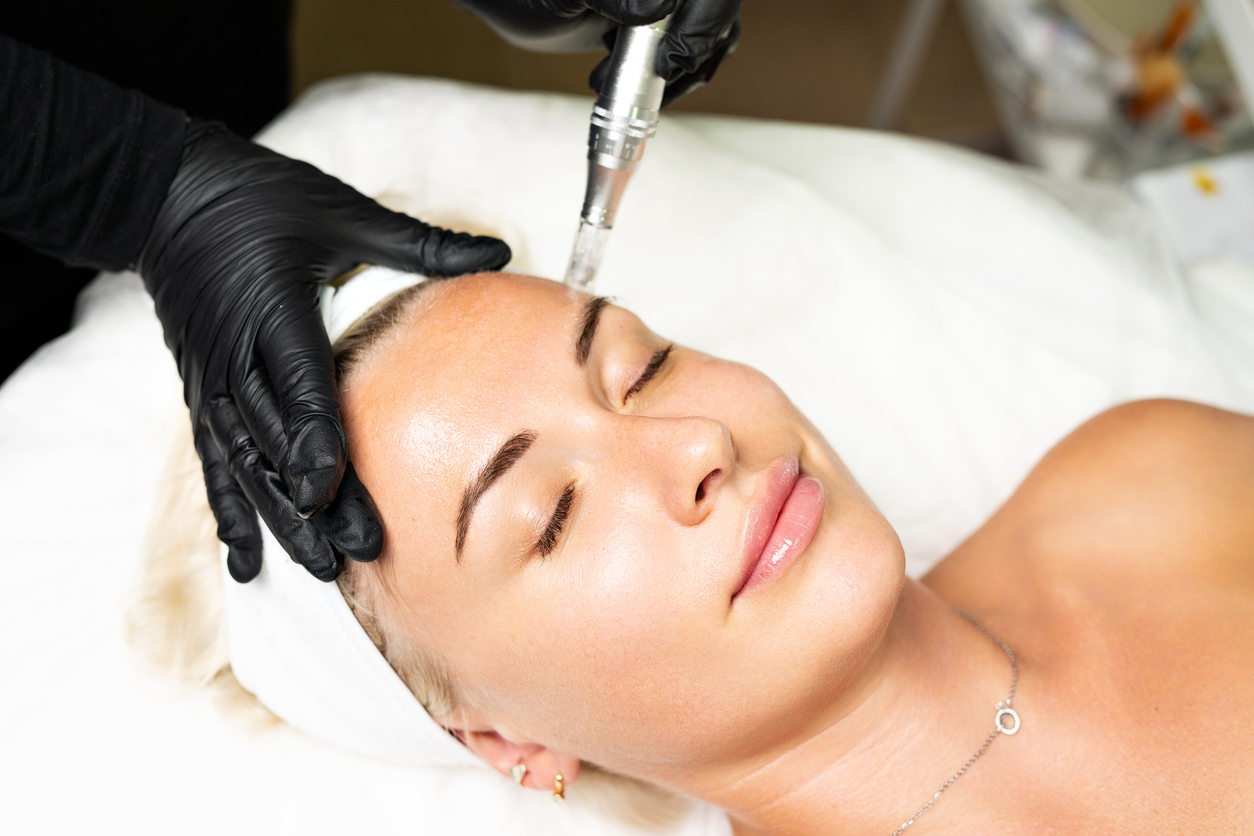
| Microneedling | Fine lines, texture and pores | $200 to $600 | A series of 3 to 6 sessions, with 1 to 3 days of pinkness |
| Morpheus8 | Texture and mild looseness | $499 to $1,500 | Microneedling plus radiofrequency, with 2 to 4 days of redness |
| Laser resurfacing | Wrinkles, sun spots and uneven tone | $115 to $1,000 | From gentle lasers with no downtime to stronger ones with a week or two |
| Ultherapy | Mild sagging on the brow, jaw and neck | $3,000 to $5,500 | One session, with results building over 2 to 3 months |
Questions to ask before you book
- Who will do my treatment, and how often do they treat people my age?
- What exact product or device will you use?
- Can we start conservatively and add more at a follow-up?
- If it is filler, can it be dissolved, and do you do that here?
- What will I look like for the first week, and when is the follow-up?
A Manhattan note for winter
Radiator heat and cold wind dry out mature skin fast. Add a humidifier by the bed, switch to a richer cream from November to March, and keep sunscreen on, since winter light still bounces off glass towers. Fall and winter are also a good time to book lasers and peels, because there is less strong sun while you heal.
Take the free Skin Match quiz. It takes a minute, then shows you the treatments and Manhattan providers that fit your skin.
Read the Skin Match guide to mature and aging skin
Sources
- Courteney Cox on fillers, The Sunday Times, February 2022, and NewBeauty, 2017 (via NBC New York)
- Courteney Cox on the Gloss Angeles podcast, March 2023 (via Us Weekly)
- American Academy of Dermatology: Skin care in your 40s and 50s
- American Academy of Dermatology: 11 ways to reduce premature skin aging
This guide is general information, not medical advice. A board-certified dermatologist can confirm what you have and what is safe for you, especially if you are pregnant, nursing or on prescription skin care. Celebrity comments are quoted from the published interviews linked below.
Top-rated for Botox & Neurotoxins
 PremierBeauté AestheticsUpper East Side · 4.8 on Google (256)
 PremierLa Réserve AestheticsTribeca · 5.0 on Google (68)Has a current offer
Inside Beauté Aesthetics
Video from Beauté Aesthetics on YouTube. See their listing, prices and reviews.
Questions to ask at your consultation
- Who is injecting, and what is their license (MD, NP, PA or RN)?
- Which product, and how many units or syringes do you plan to use?
- What is the total price, before anything starts?
- Is a two-week follow-up included in case anything needs evening out?
- For filler: is it hyaluronic acid, so it can be dissolved if needed?
Screenshot this list and bring it with you. A good provider will answer every one without pressure.
Take the free Skin Match
Three quick questions, then your options from the easy first step to the bigger fix, with real Manhattan prices.