
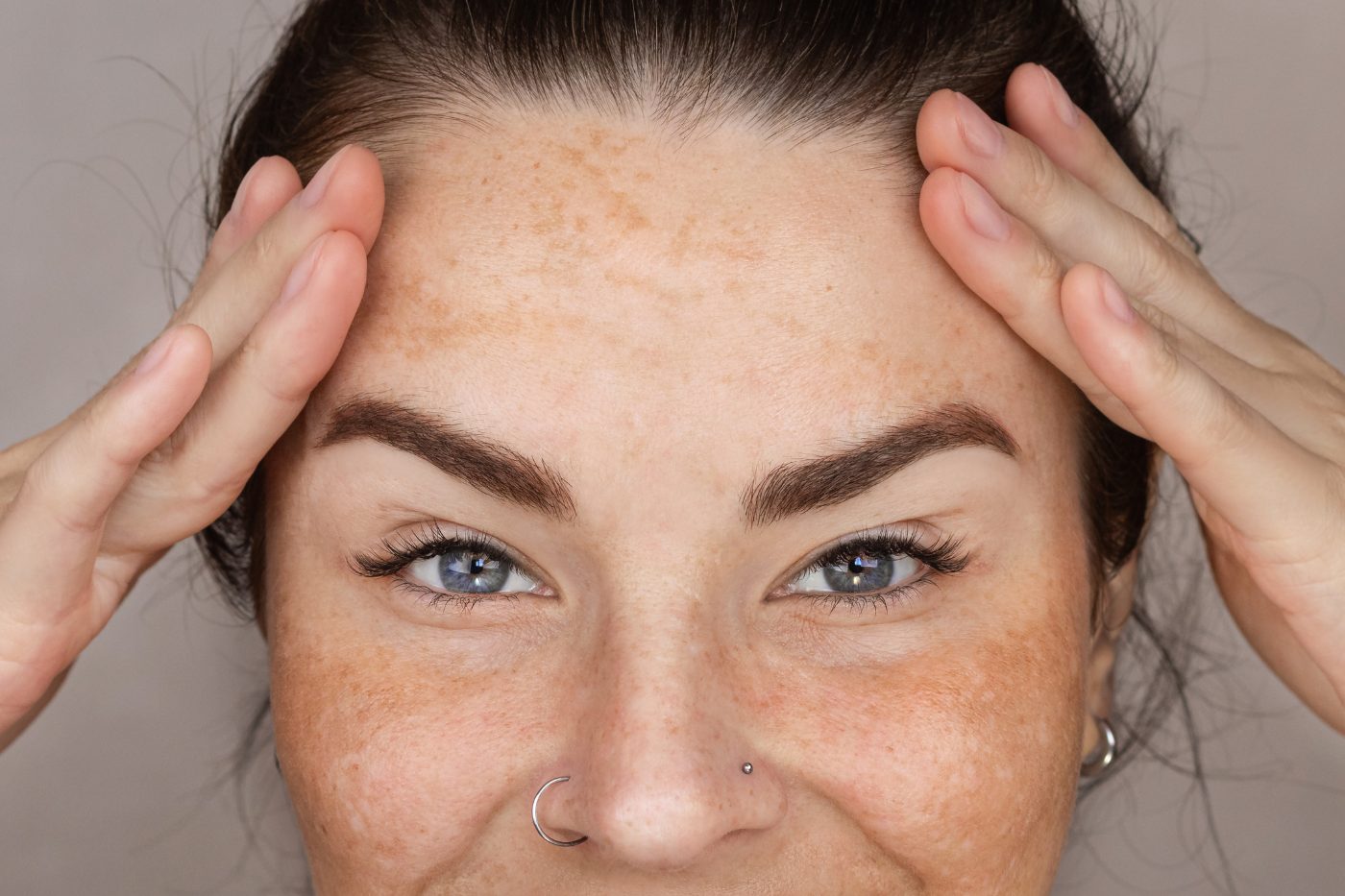
Brooke Shields has been straightforward about the sun catching up with her skin. In an interview with Glamour, as reported by NewBeauty in January 2022, she said she sees her dermatologist “for sun damage and sun spots,” including Fraxel laser, and that she avoids treatments with a lot of pain or downtime. At home she puts a vitamin C serum (from a brand she works with) on her dark spots at night, and says it lightens them over time.
That mix of a smart at-home routine and the occasional in-office treatment is how most people handle sun spots. Here is what works, what to skip, and what to ask for in Manhattan.
First, make sure it is a sun spot
Sun spots (also called age spots, liver spots or solar lentigines) are harmless, but some skin cancers can look like a brown spot at first. Before you treat anything, have a dermatologist look at any spot that is new, growing, changing color, itchy, bleeding, or different from your other spots.
| Sun spots | Melasma | Freckles | |
|---|---|---|---|
| Looks like | Flat, defined brown spots | Larger, blotchy patches, often on both cheeks | Small, light brown dots |
| Where | Face, hands, chest, shoulders | Cheeks, forehead, upper lip | Anywhere that gets sun |
| Cause | Years of sun exposure | Sun, heat and hormones | Genetics plus sun |
| In winter | Stay the same | Can lighten a little | Often fade |
If you think it might be melasma, read our guide to melasma, what helps and what to avoid, since some sun spot treatments can make melasma worse.
What you can do at home
- Sunscreen every day, all year. Use a broad-spectrum SPF 30 or higher on your face, neck, chest and the backs of your hands. Reapply every two hours outside. Without this, nothing else will hold.
- Vitamin C in the morning. It brightens and adds some protection under sunscreen.
- A retinoid at night. Retinol or adapalene speeds up skin turnover so spots fade faster. Start two or three nights a week.
- An exfoliating acid once or twice a week. Glycolic acid helps lift surface pigment. Do not use it on the same night as your retinoid at first.
- Give it three months. At-home products work slowly, and sun spots are stubborn. Take a photo now so you can compare.
What to avoid
- Tanning, in a bed or on a beach. It darkens existing spots and adds new ones.
- Skipping reapplication on long days outside, including outdoor lunches and weekend walks.
- Imported lightening creams. Some contain hidden steroids or mercury.
- Picking, scrubbing or strong DIY peels. Irritation can leave a darker mark than the one you started with.
- Assuming every brown spot is harmless. Get new or changing spots checked first.
In-office treatments that work fastest
| Treatment | What it does | Good to know |
|---|---|---|
| Fractional laser (such as Fraxel) | Treats sun spots plus texture and fine lines | Some redness and flaking for several days. Often a series |
| IPL or BBL photofacial | Targets brown spots and redness with light | Little downtime. Spots darken, then flake off over a week or two. Best for lighter skin tones |
| Chemical peels | Lift surface pigment and brighten | Strength ranges from light to deep. Ask about downtime |
| Dermatologist spot treatments | Freezing or targeted laser for single spots | Quick visits. The doctor checks the spots first |
Brooke Shields’s point about downtime is worth repeating at your consultation. Ask how many days you will look red or flaky, so you can book around work and plans.
A Manhattan note: now is laser season
Many dermatologists like to do pigment treatments in fall and winter, when the sun is weaker and you are less likely to get burned while your skin heals. Several Manhattan practices are also running seasonal offers on lasers and peels this month. You can see them on our Manhattan deals page.
Take the free Skin Match quiz. It takes a minute, then shows you the treatments and Manhattan providers that fit your skin.
Read the Skin Match guide to dark spots
Fair or sun-damaged skin? See that guide too
Sources
- Brooke Shields on sun spots and lasers, January 2022 (NewBeauty)
- American Academy of Dermatology: Age spots
- American Academy of Dermatology: How to fade dark spots
This guide is general information, not medical advice. A board-certified dermatologist can confirm what you have and what is safe for you, especially if you are pregnant, nursing or on prescription skin care. Celebrity comments are quoted from the published interviews linked below.
Top-rated for Laser Skin Resurfacing
See every Laser Skin Resurfacing provider and price Premier
Inside Beauté Aesthetics
Video from Beauté Aesthetics on YouTube. See their listing, prices and reviews.
Questions to ask at your consultation
- Which device is it, and how many of these treatments do you do each month?
- How many sessions will I need, and what is the package price?
- What does the downtime really look like, day by day?
- Are the settings adjusted for my skin tone?
- What should I stop using on my skin before and after?
Screenshot this list and bring it with you. A good provider will answer every one without pressure.
Take the free Skin Match
Three quick questions, then your options from the easy first step to the bigger fix, with real Manhattan prices.


